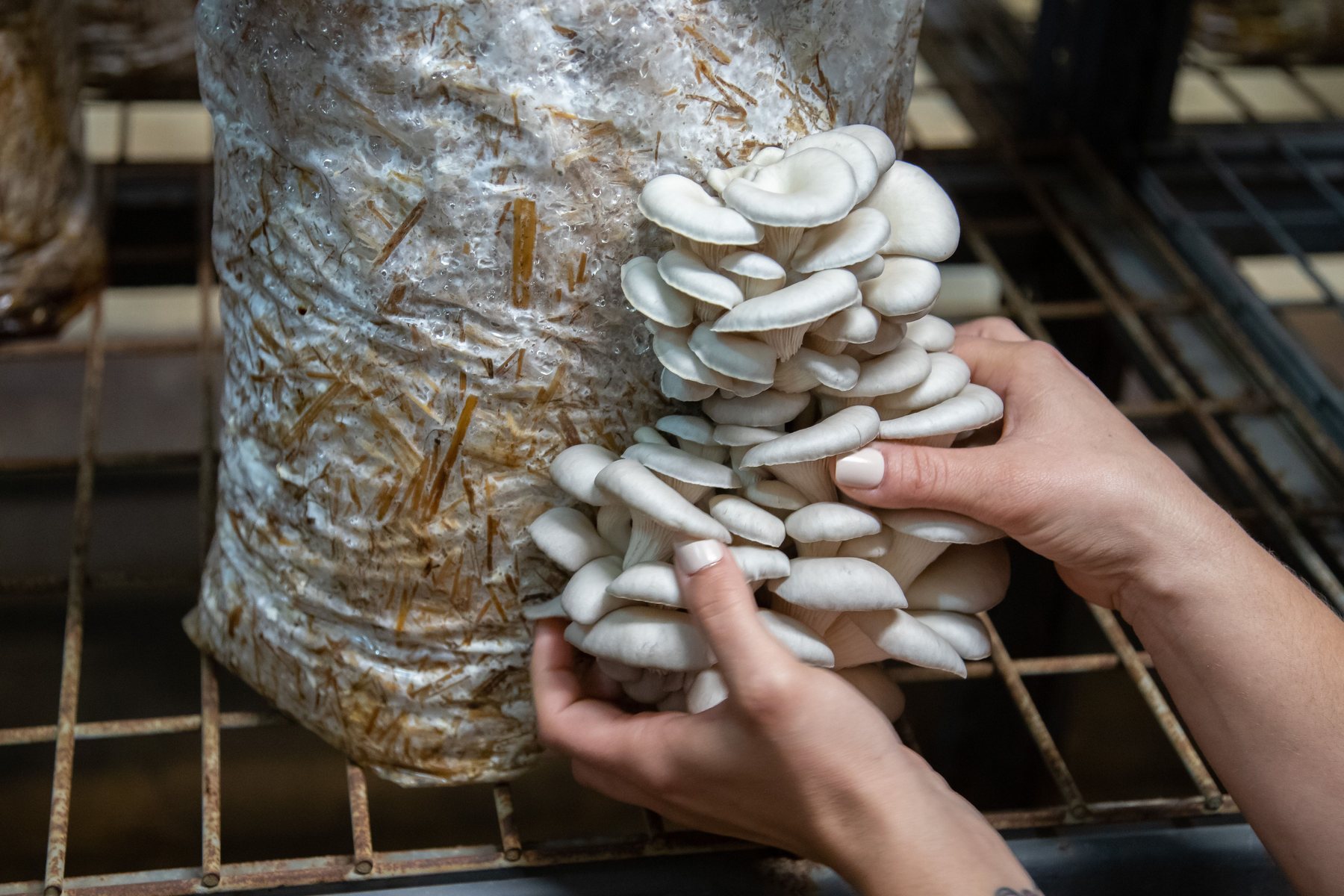
Starter System
$29
- Ready-to-fruit launch model
- Fruiting room basics
- Sanitation and crop checks
- Harvest workflow
- Starter economics
Start with controlled fruiting and market execution; add sterile lab and block production only when the economics and quality system justify the complexity.
Purchase colonized blocks, operate the fruiting room, learn environmental control, harvest, food safety, packaging, and sales. This lowers technical complexity and speeds market testing.
Add substrate preparation, sterilization or pasteurization strategy, inoculation, incubation, culture/spawn decisions, and stronger contamination controls after the market and operating discipline are proven.
The curriculum uses oyster mushrooms as a practical starting crop while teaching species- and strain-specific recipe management rather than pretending one universal environmental number works for every operation.
Environmental controls, yields, losses, pricing, and labor remain operator-specific inputs in the modeled economics.
See the evidence library →USDA market data can provide useful context. The calculator should still use your own wholesale, restaurant, market, or direct-to-consumer price assumptions and your own operating costs.
Run the mushroom calculator